

As the digital shift accelerates, companies across industries are adopting AI creative tools to meet growing demands for visual content. From advertising and marketing to product development, businesses face increasing pressure to produce high-quality images — quickly and at scale.
PixAI, originally popular among individual creators, is now gaining traction as a powerful business tool for efficient, cost-effective visual production.
In this guide, we explore:
- Why companies need AI creative tools now
- How PixAI can be applied in business settings
- The benefits and cost-saving potential of using PixAI
- Real-world corporate use cases and best practices for deployment
Why Businesses Need AI Creative Tools Today

🚀 Explosive Demand for Digital Content
Over the past few years, the demand for digital visuals has surged. Factors such as:
- The routine operation of social media accounts
- Diversified web advertising and marketing channels
- Widespread adoption of e-commerce platforms, landing pages, and owned media
- Rapid growth of video content and vertical formats
have dramatically increased the volume of content businesses must produce. What used to be a handful of campaign visuals per year now often requires weekly — or even daily updates.
Relying solely on in-house designers or outsourcing quickly becomes impractical — both in cost and speed.
📉 Talent Shortage and Production Bottlenecks
Many companies face chronic shortages of designers; even when hiring is successful, workload often exceeds capacity. External vendors may also be fully booked or unable to meet rapid turnaround demands. :contentReference[oaicite:2]{index=2}
This results in lost opportunities — businesses want content, but lack the resources to produce it quickly.
⚙️ From Rough Sketches to Production-Ready Visuals
In the past, AI tools were often used only for rough drafts or ideation. But modern image-generation AI — like PixAI — now delivers production-level quality, suitable for advertising, web banners, print materials, and more. High-resolution output and stylistic control make it feasible to use AI-generated images for real-world business needs.
How PixAI Can Be Applied in Business — Typical Use Cases
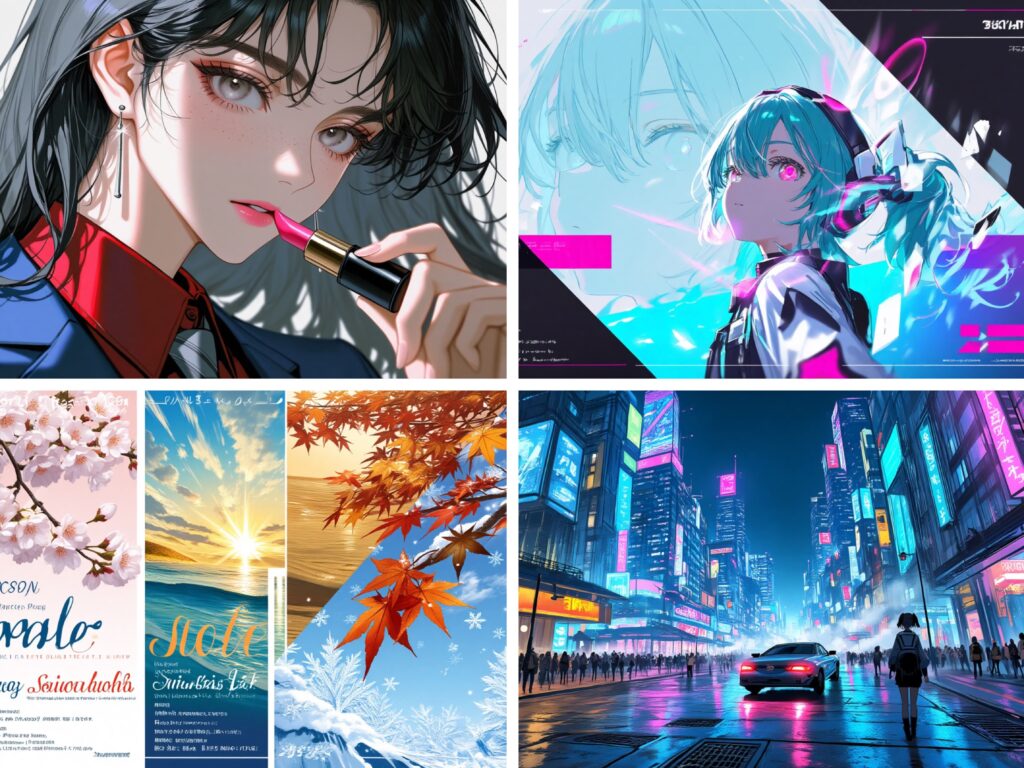
Here are common scenarios where businesses are leveraging PixAI to boost efficiency and creativity:
- Marketing & Advertising Assets — Web banners, social media posts, ad creatives, campaign visuals
- E-commerce & Product Presentation — Product visuals, mockups, promotional images for online stores
- Recruitment & Employer Branding — Visuals for job postings, recruitment pages, internal branding materials
- PR & Corporate Communications — Visual aids for press releases, newsletters, media kits
- Product Development & Concept Design — Quick prototype visuals, concept art, design drafts for new products
- Internal Documents & Presentations — Illustrated materials for reports, presentations, pitch decks
Using PixAI for these tasks can drastically reduce time and cost compared to traditional design workflows.
Benefits of Adopting PixAI in Corporate Workflows
💰 Cost Efficiency & Speed
By automating image generation, companies can significantly cut down on outsourcing costs and reduce turnaround time. Given the frequency of required visuals, this translates into concrete savings and more agile production cycles.
✅ Scalability for High Volume Content
With AI, businesses can meet high-volume content demands — from weekly social media banners to large-scale marketing campaigns — without overburdening creative teams.
🎨 Consistency and Flexibility
PixAI supports repeated generation of images with consistent style and quality. Businesses can maintain visual cohesion across different media — from web to print — while customizing as needed.
🔄 Rapid Iteration & Concept Testing
Because generation is fast and low-cost, teams can experiment with multiple variations (color schemes, styles, compositions) and quickly settle on the best option. Great for A/B testing or internal review cycles.
Real-World Corporate Use Cases & Best Practices
Businesses that have implemented PixAI successfully often follow these best practices:
- Integrate AI tools into routine content workflows — treat PixAI as a standard creative tool rather than a one-off experiment
- Use PixAI for both external marketing and internal materials — from ad visuals to internal slide decks, use wherever images are needed
- Establish quality and style guidelines — define preferred art style, resolution, composition rules to ensure brand consistency
- Combine AI-generated images with internal design edits — use AI for base visuals, then refine with designers as needed for final polish
- Monitor usage volume and cost-benefit ratio — track how many images are generated vs. traditional design cost to measure ROI
Many companies find that PixAI becomes an indispensable part of their content production pipeline — especially when they need large volumes of visuals with limited design resources.
Conclusion — Why PixAI Is a Smart Choice for Modern Businesses
In today’s fast-paced digital environment, the demand for visual content shows no sign of slowing. For companies facing tight deadlines, budget constraints, and heavy workload pressure, PixAI offers a smart, scalable, and cost-effective solution.
By integrating PixAI into creative workflows, businesses can drastically reduce design bottlenecks, speed up content delivery, and maintain consistent, high-quality visuals — whether for marketing campaigns, product launches, or internal communication.
If your business is looking to reduce cost, increase speed, and keep up with growing content demands, PixAI is a powerful tool worth trying.