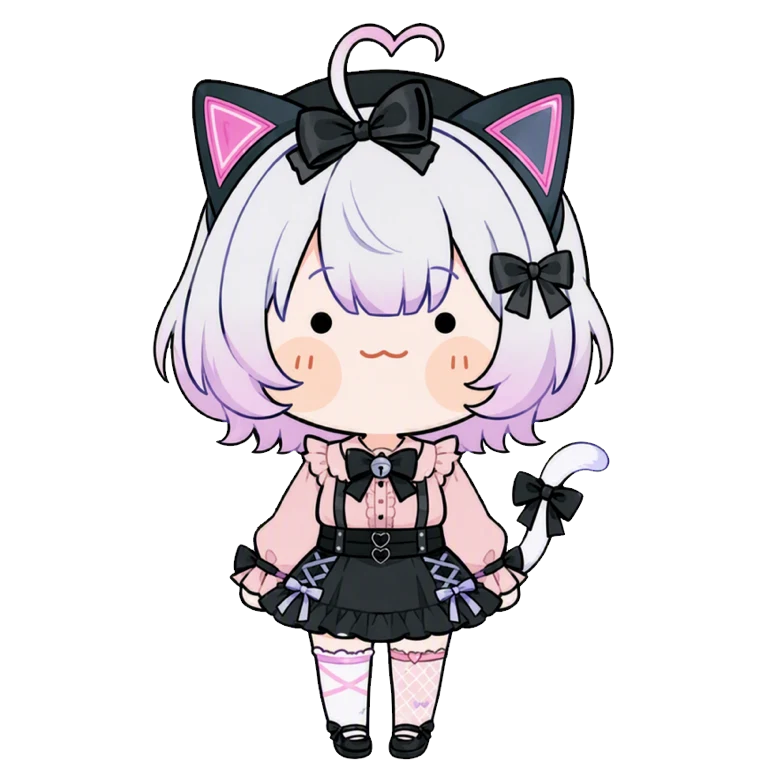
character: kenmochi_touya, clean thin lines, flat colors, minimalist, simple anime illustration, chibi style, cute, playful, no shading, kenmochi touya school uniform, Chibi, white outline, beautiful light, best shadow, color blinkMickey66
coutput language: Traditional Chinese Use the reference character [image] to create a highly decorative "Today's Fortune Omikuji" image. The reference image is for character identity only. Preserve the character's face, hairstyle, hair color, eye color, outfit identity, and key visual traits. Do NOT preserve the original pose, body posture, hand position, facial expression, camera angle, framing, body direction, or composition. Create a noticeably different pose, expression, and composition from the reference image every time. Choose ONE fortune result for this generation from: Great Blessing / Blessing / Small Blessing / Mixed Luck / Bad Luck / Great Bad Luck Treat all six results as equally valid choices. Do not favor positive, negative, mild, extreme, first-listed, last-listed, or middle-ranked results. Only after the fortune result has been selected, design the image to match that result. Vary the selected result naturally between generations. Do not favor any single fortune rank. In general, positive and mildly positive fortunes should appear more often, while negative fortunes should be less common. Display only the selected fortune rank prominently at the top. Generate a fresh fortune page every time. Vary the fortune text, character pose, expression, composition, page structure, color palette, background, props, speech bubbles, chibi actions, jokes, decorations, and visual gimmicks. The character's expression and body language should naturally match the selected fortune result, while keeping the overall image cute, playful, humorous, and shareable. Create a soft, whimsical, slightly weird, information-rich design inspired by Japanese omikuji, retro magazine horoscopes, colorful variety-show graphics, social-media share images, internet memes, and Heisei-Reiwa internet culture. Always include: X (formerly Twitter) Luck PixAI Generation Luck Also include several varied categories chosen from: Love Luck / Work or Study Luck / Money Luck / Health Luck / Social Luck / Lucky Color / Lucky Item / Lucky Action / Lucky Moment The individual category results should have some variety instead of all sharing exactly the same luck level. Include several small chibi versions of the same character with different poses and actions related to the fortune sections. Use a varied editorial layout with frames, stickers, hearts, stars, sparkles, handwritten notes, labels, tape, decorative boxes, mini icons, comic effects, playful headings, and speech bubbles. Do not copy the reference image's original pose or composition. All readable text must be written in the specified output language. Do not include exact dates, weekdays, calendars, schedules, or other date-related information. cheungloklun
In the anime style of "Pandora Hearts", screenshot, a frame from the anime, depicting an elderly woman with a wrinkled face and age spots, wearing thick glasses. Her hair is cream-gray with a yellowish tinge, sparse, and gathered in a careless bun at the back of her head. Her eyes are light orange with a reddish tinge, always squinting. She has a hooked nose and thin lips in an eternal smile. Her body is plump and soft, with big hands and cheeks. She is dressed in a long dark brown dress with a white apron, always stained with flour, a white kerchief on her head, and comfortable flat-soled boots on her feet. On her belt is a bunch of keys, a stirring spoon, and a small knife. The image is presented from four different angles, capturing the character's appearance and attire in detail, with a focus on realism and the unique art style of "Pandora Hearts".София22
どA medium shot from a slightly elevated angle captures the interior of a community center hall in Kumamoto, where elderly residents and local youth are gathered around large wooden tables. Elderly men and women, dressed in modest traditional Japanese casual wear, are gesturing warmly with their hands as they teach young students, who lean in with focused expressions, how to create traditional crafts. Scattered across the tables are colorful papier-mâché tigers and various handcrafted items, their textures appearing tactile and detailed. The hall features high ceilings, polished wooden floors, and large windows on one side, through which soft, volumetric sunlight streams in, illuminating dust motes dancing in the air. The background shows the remnants of the room's former use as an evacuation shelter, with neatly stacked foldable chairs and community notices on the walls. The visual style is a high-quality anime illustration with a warm, nostalgic color palette, soft focus on the periphery, and a heartwarming, serene atmosphere of cultural transmission and communal bonding.どうするどうする?11
kenmochi_touya from nijisanji sitting on a torii gate looking down at the viewer, wearing a kimono with a vine pattern, crow wings on his back, transparent illustration, pastel watercolor, blur, vivid colors, simple lines, delicate, sense of era, fingers, elaborate clothing, soft pastel colors, soft shadows, bright highlights, colorful, soft lightingrei11
character: fuwa_minato, kenmochi_touya, kaida_haru, kagami_hayato. A medium shot from a front-facing eye-level angle captures four young men on a tree-lined path. In the immediate foreground, fuwa_minato and kenmochi_touya are leaning in, peering curiously toward the viewer with puzzled expressions; fuwa_minato has multicolored purple and grey hair and wears a black jacket, while kenmochi_touya has short purple hair and a school uniform with a red necktie. In the distant background, kaida_haru and kagami_hayato are standing together, arm-in-arm, observing the scene with calm gazes. Kaida_haru has grey hair and tassel earrings, and kagami_hayato has short brown hair and a formal collared shirt. The setting is a scenic avenue lined with lush green trees that form a canopy overhead, filtering the daylight. The atmosphere is bright and peaceful, rendered in a high-quality anime illustration style with soft lighting and vibrant colors.れい
年齢Generate a comprehensive character concept breakdown image based on Image 1. The image must feature the full-body character design at the center, surrounded by detailed elements such as layers of clothing, different facial expressions, core items, material close-ups, and everyday personal items that showcase the character's lifestyle. The character has the same pose as the one in Image 1. Visual Specifications: 1. Composition Layout: - Center Position: Place the character's full-body or primary dynamic pose as the visual anchor. - Surrounding Position: Neatly arrange the deconstructed elements around the central character. - Visual Guide: Use hand-drawn arrows or guide lines to connect the surrounding elements to the corresponding part of the character (e.g., a bag connected to the hand). 2. Deconstruction Details – Key Iterative Areas: - Clothing Layers: Break down the character's outfit into individual pieces. If layered, show the state of the inner layers when outer layers (like jackets) are removed. - New Addition – Underwear Deconstruction: Independently display the character's innerwear, focusing on design and material details. - Expression Set: In corners, draw 3-4 different headshots showcasing different emotional expressions. - Material Close-ups: Select 1-2 key areas for zoomed-in material textures. - New Addition – Item Texture Close-ups: Add depictions of small items, focusing on their textures. - Associated Items: This section goes beyond large props and includes "lifestyle fragments": - Handbags and Contents: Illustrate the character's everyday bag or clutch, "opened" to show scattered contents. - Cosmetics & Care: Show the character's common makeup and skincare products. - Private Lifestyle Items: Visualize personal items that reflect the character's hidden side. Depending on the character's personality, this could include a private diary, medicine/supplement box, vape, or even more intimate objects. 3. Style & Annotations: - Art Style: Maintain a high-quality 2D illustration style or conceptual sketch style with clean, sharp lines. - Background Design: Simple background should match the character's style, atmosphere, and environment, and align with the overall design. - Text Annotations: Simulate handwritten notes next to each deconstructed element, briefly describing materials or brand/model hints. Execution Logic: When the user provides an image or description: 1. Analyze the character's core features, outfit style, and potential personality. 2. Extract the primary deconstructible elements (e.g., outerwear, shoes, major expressions). 3. Brainstorm and design secondary depth elements (e.g., what style of underwear would she wear? What lipstick would be in her bag?). 4. Generate an image that combines all these elements, ensuring accurate perspective, cohesive lighting, and clear annotations. 5. Use this language: Japanese 年齢
к1boy, smile, short hair, shirt, long sleeves, green hair, closed mouth, jacket, white shirt, standing, green eyes, school uniform, male focus, closed eyes, shoes, pants, black jacket, free underwear boxers, sneakers, arm at side, crossdressing, arrow (symbol), gakuran, pointing out the details, crime prevention buzzer, cart, diploma, perfect eyes, ultra detailed, child, young izuku, fluffy hair, dark green hair, multicolored hair, black hair, freckles, blue shirt, dark green shorts, white sneakers, full bodyКирилл11